Poker Room Manager: software for poker rooms
Manage tables, waiting lists and tournaments with Poker Room Manager, and practise new postflop decisions on Tools of Poker.
2026-11-15 19:54:15 — Tools of Poker
November 15, 2026, 7:54:15 PM UTC — Tools of Poker
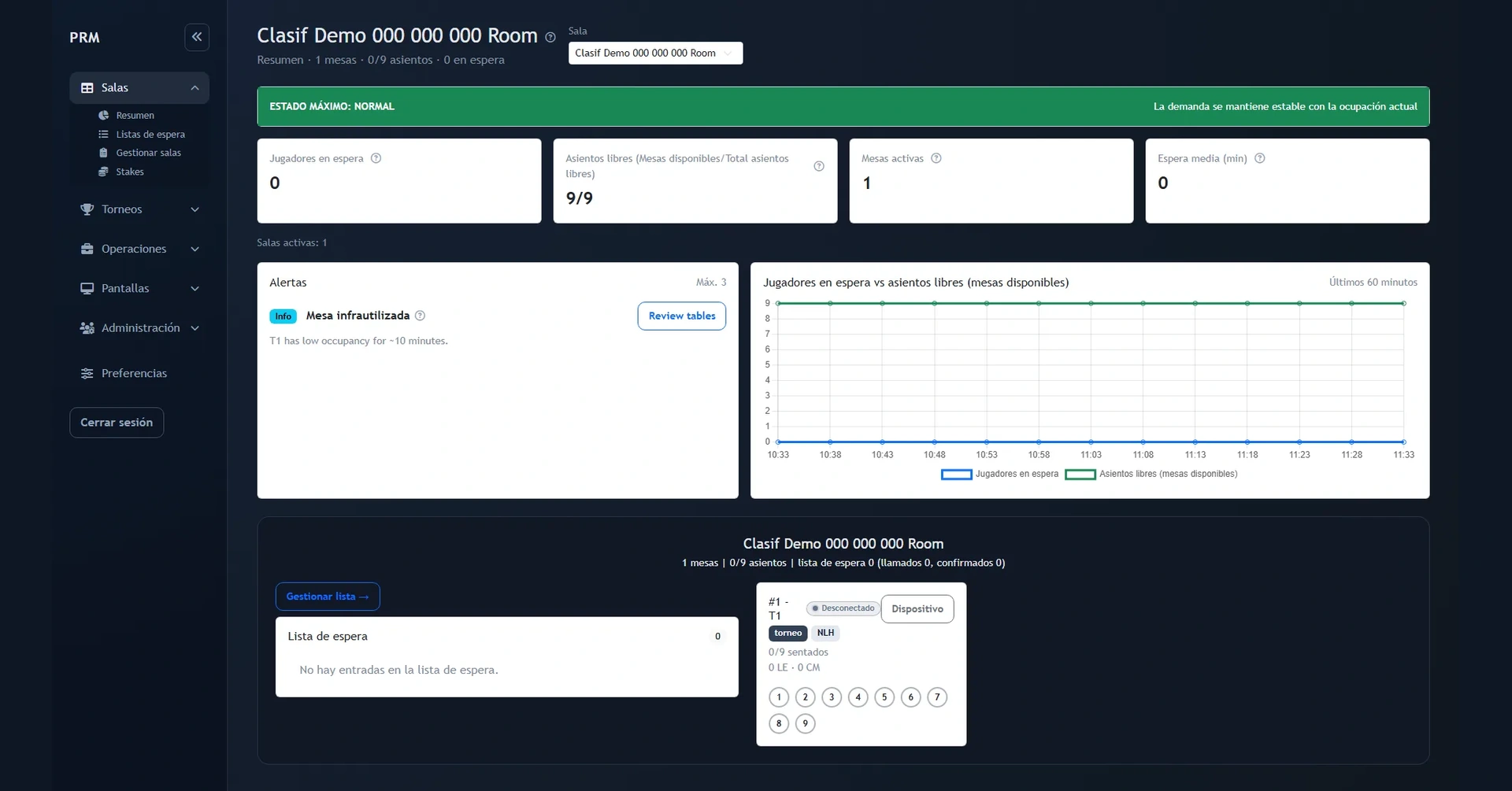
When a seat opens up, someone needs to spot it, find the next player and update the waiting list. Keeping the floor and the list in separate places means checking several sources for each change. Poker Room Manager brings that work into one system. If you are here to practise, Tools of Poker has also added eight exercises, five of them in Level 5 on postflop decisions.
Poker Room Manager: from the waiting list to the table
Floor staff can see table occupancy, check who is waiting and manage seat assignments. When a seat opens up, for example, they can review the list, assign the seat and track occupancy from the same place. That means fewer reasons to copy information between spreadsheets or send separate updates every time a table changes.
The system is modular. Alongside floor management and waiting lists, it covers tournament structures and clocks, dealer coordination, cashier operations and chip tracking. The scope depends on the plan and how your room operates. Explore the Poker Room Manager modules to see which tasks you could bring together.
Request a demo for your poker room
If you run a poker room, casino, club or tournament circuit in Spain or elsewhere, the demo is a chance to review how you work and discuss a paid pilot. Essential starts at €1,500 a year plus €200 for initial setup and covers up to five tables per room. See the annual plans and prices or request a Poker Room Manager demo.
What’s new on Tools of Poker: eight new exercises
The new exercises range from the rules of raising to evaluating decisions on the river. In Level 5, start with the numbers provided, then move on to working them out from a range.
Calling an all-in: do you have enough equity?
The all-in call exercise with supplied equity (5.9) isolates the decision: compare your equity with what you need at the price you are getting. In the all-in call exercise with range analysis (5.10), you first estimate your equity against the hands your opponent could shove. The two exercises separate how often you need to win from how often you expect to win against that range.
River bet sizing: compare two bets and a check
In the river sizing exercise with supplied frequencies (5.11), compare two sizes using the fold frequency and your equity when called. In the river sizing exercise with range analysis (5.12), work out which hands would call or fold against each size. A larger bet can look appealing, but if worse hands stop calling, a smaller bet or a check may be worth more.
Blockers: which of two hands would you bluff?
The bluff selection exercise (5.13) keeps the board and bet size the same so you can compare two candidate hands. Blocking hands that would call may help your bluff; blocking hands that would fold may hurt it. Looking at both effects gives you a reason for choosing one hand over the other.
Bet sizing, side pots and implied odds
Bet sizing and raises (0.4) helps you turn pot percentages into big blinds and distinguish the total raise size from the amount you still need to put in. Side pots (0.5) lets you practise working out who can win each pot when players go all-in for different amounts. In postflop implied odds (2.5), estimate how much more you need to win if your draw comes in and whether you could realistically get paid that amount.